Retire to Poland with Confidence: Essential Tips for Brits Looking to Move
TL;DR
Retiring to Poland can be financially attractive, but it requires careful planning. Tax residency, healthcare access, pensions, and currency exposure all need to be considered before you move. The biggest mistakes usually come from relying on outdated assumptions rather than getting advice tailored to your situation.
Thinking About Retiring to Poland?
Moving abroad is about far more than choosing where to live. Understanding how your pensions, tax position, healthcare arrangements and retirement income will work in Poland can make a significant difference to your long-term financial security.
While Poland can offer an attractive combination of affordability, culture and quality of life, it is important to understand how your finances will be affected once you become resident there. Decisions made before you move can have lasting implications for your retirement income, tax position and overall financial wellbeing.
Taking advice before you relocate can help you avoid costly mistakes, identify potential opportunities and ensure your retirement plans are built on solid foundations from the outset.
Whether you are concerned about your UK pensions, State Pension, tax residency, healthcare access or long-term retirement income strategy, a personalised plan can provide clarity and confidence before you make the move.
📚 In this series
This collection of articles explores everything British expats and returning Poles need to know about UK pensions and retirement in Poland. From claiming your UK State Pension abroad to understanding tax rules, SIPPs, and double taxation treaties, the series provides clear, practical guidance to help you make confident financial decisions.
❓ Can I retire to Poland from the UK?
Yes – you can retire to Poland from the UK, but there are some important considerations:
- Residency & visas: Since Brexit, UK citizens need to apply for residency in Poland, typically through a long-term residence permit based on retirement and sufficient financial means.
- Healthcare: You’ll need valid health cover. Legal residents can access Poland’s public healthcare (NFZ), while many retirees also choose private insurance.
- Pensions: Your UK State Pension is payable in Poland and benefits from annual increases. Private pensions may be managed or transferred via international solutions like SIPPs or QROPS.
- Cost of living: Poland is generally more affordable than the UK, especially outside major cities.
- Taxes: The UK–Poland double tax treaty helps avoid paying tax twice, but professional advice ensures your pensions and savings are structured tax-efficiently.
👉 In summary: Yes, you can retire to Poland from the UK — but it’s wise to plan carefully around residency, healthcare, pensions, and taxation for a smooth transition.
Many UK citizens are choosing to retire in Poland – from Brits with Polish roots, to those married to a Polish spouse, to people drawn by the lower cost of living and rich culture. For Brits in Poland, especially those returning to Poland after years abroad, the country offers an affordable, peaceful lifestyle, good public transport, reliable healthcare access, and the chance to live closer to family.
To make the most of your move, sort out your pension, tax, and financial planning in advance.
In this post, you’ll learn how to:
- Understand how your UK pensions and investments are taxed in Poland
- Compare Polish inheritance tax with UK inheritance tax
- Avoid double taxation and structure your wealth efficiently
- Secure residency and access healthcare
No to jedziemy! 🙂
Why UK Expats Are Retiring to Poland
While Poland doesn’t have a Mediterranean climate, it offers distinct advantages for UK retirees—especially those married to Polish nationals. It is one of the fastest‑growing destinations for UK retirees.
Key benefits
- Lower cost of living — pensions typically stretch further than in the UK
- Cultural and family ties — many partners have deep roots in Poland
- Safety — Poland is widely considered a safe and secure place to live
- Residency options — often straightforward for spouses of Polish nationals
Don’t move without the numbers. UK–Poland double tax treaty rules and pension taxation can be complex. Get personalised advice before you act
Why Financial Planning Matters Before Moving to Poland
Retiring to Poland can offer many advantages, including a lower cost of living, a central European location and a rich cultural heritage. However, while the move itself may seem straightforward, the financial implications can be more complex than many people initially realise.
One of the first areas to consider is your UK State Pension. Understanding how and when you can claim it, how it will be paid while living in Poland, and how it fits into your overall retirement income strategy is an important part of planning for the future.
You should also review any private pensions, workplace pensions and SIPPs you hold. The way these pensions are structured, accessed and taxed can have a significant impact on your long-term retirement income. Decisions made before moving may help improve flexibility, tax efficiency and income sustainability later in retirement.
Polish tax residency is another key consideration. Once you become tax resident in Poland, different rules may apply to your pensions, investments and other sources of income. Understanding these rules in advance can help you avoid unexpected tax liabilities and make informed decisions about how your finances are organised.
Access to healthcare should also form part of your planning. While Poland has both public and private healthcare options, eligibility and costs can vary depending on your circumstances. Understanding how healthcare will be funded and accessed can help avoid surprises after relocation.
Many British retirees also underestimate the impact of currency fluctuations. If your pension income is received in pounds but your day-to-day expenses are paid in Polish złoty, movements in exchange rates can affect your purchasing power over time. A change in currency values may have a greater impact on your lifestyle than many people expect.
Estate planning across two countries is another area that is often overlooked. Wills, inheritance rules, beneficiary nominations and succession laws can become more complicated when assets and family members are spread across different jurisdictions. Reviewing these arrangements before you move can help ensure your wishes are carried out and reduce potential difficulties for your family.
The most successful moves to Poland are usually supported by careful financial planning before relocation takes place.
Taking the time to understand how your pensions, tax position, healthcare arrangements, investments and estate plans fit together can help you avoid costly mistakes and give you greater confidence about your future. A well-prepared financial plan allows you to focus on enjoying your new life in Poland rather than worrying about avoidable financial problems later on.
Comparing Retirement Destinations in Europe
Poland is an increasingly popular retirement destination for UK citizens looking for affordability, quality of life, and access to European healthcare. However, it is not the only option worth considering. Many retirees also explore alternatives such as retiring in Greece or retiring to Spain, each offering different residency rules, tax treatment, and lifestyle considerations.
Comparing countries side by side helps ensure that decisions are based not just on cost or climate, but on how pensions, healthcare access, and long-term planning are affected once you live overseas.
>>> Did you know? Over 8,000 Brits already call Poland their home.
Residency & Tax Status: What You Need to Know About Moving to Poland
Residency Rules After Brexit
Since the UK left the EU, British citizens no longer have automatic residency rights in Poland. You must apply for residency via one of the routes below.
1) Residence through a Polish spouse
This is the most straightforward path. If you are married to a Polish citizen, you can apply for a temporary residence card that can lead to permanent residency after a qualifying period.
2) Independent residency
You can also retire to Poland without a Polish spouse by demonstrating that you meet key requirements:
- Proof of regular passive income (e.g., pensions)
- Valid health insurance
- A registered address in Poland
- Clean criminal record
Polish Tax Residency: What It Means
If Poland becomes your centre of vital interests or you otherwise meet residency criteria, you will be treated as a Polish tax resident.
- Your worldwide income becomes taxable in Poland.
- You must declare relevant foreign assets to the Polish tax authorities.
Careful planning helps avoid double taxation and optimises your income structure.
How to Draw Your UK Pension in Poland (and Minimise Tax)
Accessing Your UK Pension in Poland
In the UK, many people use flexi‑access drawdown (FAD) to control how and when they take income.
However, once you move overseas, some UK providers restrict flexible access. Your options may be limited to:
- Buying an annuity
- Taking 100% as a lump sum, which can trigger:
- Likely UK withholding tax, and
- Polish income tax on most or all of the lump sum
UK Pension Taxation in Poland
Poland does not offer a special flat tax regime for foreign pensions (unlike some countries). Pension income is taxed progressively, like regular earned income.
Under the UK–Poland Double Tax Treaty:
- Your UK State Pension is taxable only in Poland when you are Polish tax resident.
- Income from UK private pensions is also taxable only in Poland (UK government service pensions are a separate category and can be taxed in the UK).
Key Tips
- Inform HMRC that you have left the UK using form P85.
- Apply for a UK “No Tax” (NT) tax code so UK providers do not deduct tax at source when Poland has taxing rights.
- Work with a specialist cross‑border financial adviser to structure pension withdrawals tax‑efficiently.
UK State Pension & Poland
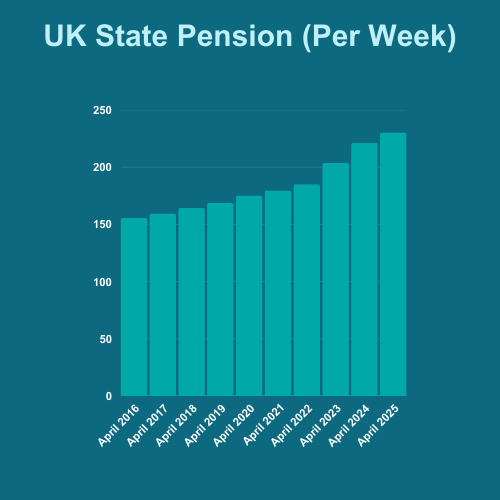
The UK State Pension continues to rise annually for residents in Poland under the current reciprocal arrangements. This ensures your State Pension remains protected against inflation while you live in Poland.
Find out more about how the UK State Pension works when you are an expat here
UK Pensions and Retirement Income Abroad
For many people retiring to Poland, pensions form the backbone of retirement income. Understanding how UK State Pensions and private pensions are paid, taxed, and reported once you are resident overseas is a crucial part of planning with confidence.
In some cases, retirees also need to consider whether international pension arrangements remain appropriate. Broader guidance on topics such as whether QROPS are still suitable can help ensure pension decisions support long-term income needs and estate planning goals, rather than creating unintended complexity.
Financial Advice in Poland
Most UK independent financial advisers (IFAs) are not familiar with the pitfalls of living overseas. Furthermore, since Brexit, many UK advisers now decline to work with clients who are resident in the EU.
🔗 How Brexit Changed Financial Advice for UK Expats in the EU
In Poland, the UK-style concept of an independent financial adviser does not really exist; most financial products are distributed via banks and insurance companies.
For the best outcomes, choose an adviser who understands both the UK and Polish systems and can provide joined‑up, cross‑border advice.
Inheritance Tax (IHT): UK vs Poland
Do Brits Still Pay IHT After Moving to Poland?
- UK IHT can still apply to your worldwide assets if, on death, you have spent more than 10 of the last 20 years in the UK.
- Even with less than 10 of the last 20 years in the UK, UK‑situated assets, e.g., property and pensions (from 6 April 2027), remain within the UK IHT net.
- In the UK, IHT is charged on the estate of the deceased. In Poland, the recipient of the inheritance is liable for tax.
- This difference can create a double taxation risk (IHT is not covered by the UK–Poland double tax treaty).
How to Reduce Your IHT Exposure
- Review your UK will and create a Polish will for local assets.
- Use UK gift allowances to transfer wealth early and reduce your estate.
- Consider placing life insurance in trust to help meet future IHT liabilities.
- Work with advisers experienced in UK–Poland cross‑border estates.
Note: Tax rules change, and individual circumstances vary. Seek personalised advice before acting.
Planning Your Retirement in Poland
Moving to Poland can be an exciting opportunity, but it is important to remember that every expat’s financial situation is different. What works well for one person may not be the right solution for someone else.
Pension arrangements can vary significantly. You may have a combination of UK State Pension benefits, workplace pensions, SIPPs, investments or other retirement assets. Understanding how these different sources of income work together is often key to building a sustainable and tax-efficient retirement plan.
Tax consequences can also differ depending on your residency status, sources of income and personal circumstances. Decisions made before you relocate may affect how your pensions, investments and other assets are taxed once you become resident in Poland.
Cross-border financial planning requires careful coordination. Issues such as healthcare funding, currency risk, estate planning, inheritance considerations and future plans to return to the UK can all influence the decisions you make before and after your move.
Taking professional advice before making major financial decisions can help you understand your options, avoid common pitfalls and build a retirement strategy that supports the lifestyle you want to enjoy in Poland.
Cross-Border and Succession Planning
Retiring to Poland does not automatically remove UK financial or legal considerations. Tax residency, inheritance rules, and the treatment of UK-based assets can continue to apply long after you have moved.
For retirees with assets, pensions, or family ties spanning more than one country, coordinated planning is essential. This is where cross-border financial advice helps ensure that retirement, estate, and succession planning remain aligned as circumstances change.
Case Study: Retiring to Poland — How Steve & Kasia Structured Their Finances
Background
Steve (60), from Manchester, and Kasia (52), originally from Kraków, are planning to retire to Poland. They want to live closer to family, enjoy a slower pace of life, and help their two children in the UK onto the property ladder.
Financial Overview
- Defined contribution pensions (Steve): £550,000 total across three schemes
- Cash savings: £200,000
- Stocks & Shares ISA: £180,000
- State Pension: Steve due full UK State Pension at 67; Kasia currently has 20 qualifying years
Their Key Challenges
- Structuring Steve’s pensions for flexibility and tax efficiency in Poland
- Deciding what to do with the ISA (not tax-free in Poland)
- Helping their children in the UK without triggering IHT issues
- Managing currency risk between GBP, PLN, and EUR expenses
Their Strategy
- Transfer Steve’s three UK pensions into an International SIPP, giving him control over how and when funds are withdrawn
- Apply for a No Tax (NT) code to receive International SIPP payments without UK tax deducted at source
- Sell ISA investments before taking up Polish tax residency
- Move part of their savings into EUR and PLN-denominated accounts
- Make gifts to their children and put a life insurance policy in trust to offset future IHT exposure
- Arrange voluntary UK National Insurance Contributions for Kasia to build her State Pension entitlement
Outcome
With support from a cross-border adviser, Steve and Kasia created a tax-efficient income structure, avoided double taxation, and provided for their family without excessive UK inheritance tax.
How Poland Compares with Other Retirement Destinations
If you are considering retiring or relocating to Poland, it can be useful to understand how other popular destinations compare – particularly in terms of tax residency, pension treatment, cost of living, and long-term financial planning.
Many British retirees compare Poland with established southern European destinations such as Spain and Greece, where climate and lifestyle benefits are balanced against different tax and residency rules.
Others explore options beyond Europe altogether, including Dubai or Saudi Arabia, which offer very different financial environments for British expats and retirees.
Regardless of where you choose to live, managing finances across borders is rarely straightforward. UK tax residency status, pension access, investment structuring, and future inheritance planning often require a cross-border financial advice approach – particularly if you move countries more than once or expect to return to the UK later in life.
For a wider perspective on the key considerations involved, you may also find it helpful to explore this overview of
retiring abroad and how it applies to British citizens planning life overseas.
Thinking of Retiring in Poland?
Download my FREE checklist
Make your move stress‑free with our free Retiring in Poland Checklist. Clear steps, no fluff – just what you need to plan with confidence.
Common Financial Mistakes British Expats Make When Moving to Poland
Moving to Poland can be an exciting opportunity to enjoy a lower cost of living, a central European location and a high quality of life. However, many British expats underestimate the financial implications of relocating and only discover potential problems after they have already made the move.
Assuming Polish tax rules are the same as the UK
One of the most common mistakes is assuming that financial arrangements which worked well in the UK will continue to work in exactly the same way in Poland. Once you become tax resident in Poland, different rules may apply to your pensions, investments and other sources of income. Understanding these differences before you move can help you avoid unexpected tax liabilities and costly mistakes.
Not reviewing pension arrangements before relocating
Many people move abroad without reviewing their workplace pensions, private pensions or SIPPs. However, retirement abroad may create opportunities to improve income planning, investment strategy or tax efficiency. Reviewing your pension arrangements before you relocate can help ensure they remain suitable for your long-term goals.
Ignoring exchange rate risk
If your retirement income is received in pounds but your daily expenses are paid in Polish złoty, fluctuations in exchange rates can affect your purchasing power over time. Even relatively small currency movements can have a noticeable impact on your standard of living during a retirement that could last several decades.
Failing to understand healthcare requirements
Healthcare is often overlooked during the excitement of planning a move abroad. Understanding how healthcare works in Poland, what you may be entitled to and whether additional private cover is appropriate should form part of your wider retirement planning process.
Overlooking inheritance and estate planning
When assets, beneficiaries and family members are spread across multiple countries, estate planning can become more complicated. Existing wills, beneficiary nominations and inheritance plans may need reviewing to ensure they continue to reflect your wishes and remain effective after your move.
Many people only begin addressing these issues after they have already relocated. By then, some decisions can be more difficult, expensive or time-consuming to correct.
Many of these issues can be avoided with proper planning before you relocate.
Taking the time to review your pensions, tax position, healthcare arrangements, investments and estate planning before moving to Poland can help you avoid unnecessary complications and give you greater confidence about your financial future.
Real People, Real Results
“In looking for a financial advisor, key to me was to be able to feel that the person the other side of the table was trustworthy and would place my interests at the centre of advice.
Ross gave me this feeling the first time we met and the cooperation since then has shown that it is really the case, with excellent support provided throughout the process he has been engaged in.”
— Alan Davies
Moving to Poland as a UK Retiree
FAQs
Yes—but they’re no longer tax-free. Any income or gains are taxable under Polish rules. In addition, you cannot make any further contributions to an ISA if you are no longer UK resident.
No. Thanks to the UK-Poland tax treaty, pensions are only taxable in Poland.
Yes.
It depends. If you rent it out, income is taxable in both countries (but relief is available). You might face UK capital gains tax if you sell after becoming Polish tax resident.
It runs from the 1st of January to the 31st of December.
It depends on your bank. Many UK banks have closed the accounts of EU residents. Consider multi-currency solutions like Wise or Revolut.
Poland offers a lower cost of living compared to the UK, quality healthcare, close proximity to the UK for travel, and a rich cultural life. Many British expats also have personal ties to Poland, such as a Polish spouse, which makes integration easier.
Retirees should open a Polish bank account for daily expenses. To minimise forex costs, services like Wise or Revolut offer better exchange rates than traditional banks. Keeping an eye on GBP/PLN exchange rates can also help optimise transfers.
Major cities like Warsaw, Kraków, and Gdańsk offer vibrant cultural scenes and expat communities. The countryside provides a quieter, more affordable lifestyle. The Baltic coast and Tatra Mountains are great for those who enjoy nature and outdoor activities.
Renting is a flexible and affordable option for expats who want to explore different areas before settling. Buying property can be a good long-term investment, especially as prices are still lower than in Western Europe, but legal advice is recommended before purchasing and there may be restrictions on where you can buy land.
Final Thoughts: Planning a Tax-Efficient Retirement in Poland
Retiring in Poland can offer an affordable, culturally rich, and fulfilling lifestyle—especially for those with family ties.
But to make the most of it, you need to:
✔ Optimise your pension withdrawals
✔ Understand your tax residency and reporting obligations
✔ Plan for inheritance tax exposure in both countries
✔ Manage currency risk
💡 Want Expert Guidance on Your Polish Retirement?
I am a UK-qualified financial adviser and have been living in Warsaw for the past 24 years.
I specialise in helping Brits in Poland get their financial ducks in a row.
Use this link to schedule a call and see how I can help.
Talk to an Expert
Thinking about moving to Poland? Before making the move, it is important to understand how your UK pensions, tax position, healthcare arrangements, retirement income and estate planning will work once you become resident overseas.
I’m Ross Naylor, a UK-qualified Chartered Financial Planner and Pension Transfer Specialist who has been living in Poland for more than 25 years. During that time, I have helped British expats navigate the financial realities of relocating, retiring and building a life in Poland.
As someone who has personally experienced life in Poland and professionally advised expats across Europe for nearly 30 years, I understand both the practical and financial challenges that can arise when moving across borders.
I firmly believe your location in the world should never be a barrier to expert, impartial and transparent financial advice you can trust.
Whether you're trying to understand how your UK pensions and State Pension will be taxed in Poland, how to structure your retirement income, how currency fluctuations between pounds and złoty could affect your spending power, or how inheritance and estate planning work when assets span multiple countries, I can help you build a financial strategy designed to support your long-term goals.
Every move is different. My role is to help you understand the options available, avoid common mistakes and make informed decisions before and after your relocation to Poland.
Book a Discovery Call